

10 Shipping Container Workshop Ideas
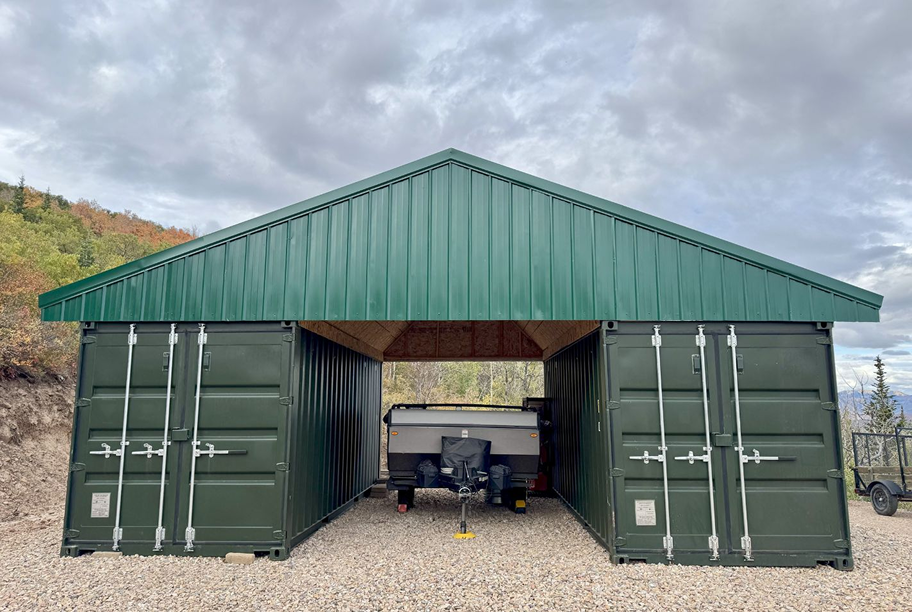
A shipping container workshop is one of the smartest ways to set up a dedicated workspace on your property.
Containers are made from heavy-gauge Corten steel, which means they are incredibly secure and strong, weather-resistant, and practically fireproof.
They arrive as a ready-made shell with four walls, a solid floor, and a watertight roof, so you skip the most expensive and time-consuming phases of traditional construction.
That is what makes a shipping container shop such a compelling option. You are not pouring a foundation, framing walls, or waiting months for a building crew. A shipping container for sale can be delivered to your site and placed in a single day.
Cargo containers are also naturally resistant to pests, rot, and mold, which are problems that plague wood-framed shops over time. And because the entire unit is portable, you can relocate it down the road if your needs change.
In this guide, we break down 10 practical shipping container workshop ideas that range from simple add-ons to full build-outs. Each modification serves a specific purpose, and you can mix and match them to create shipping container workshop plans that fit your exact needs and budget.
What Is a Standard Shipping Container?
A standard shipping container is a corrugated steel box originally designed for intermodal freight transport. The most common sizes are 20-foot and 40-foot units, both measuring 8 feet wide. A standard-height container stands 8 feet 6 inches tall, while a High Cube (HC) version stands 9 feet 6 inches tall.
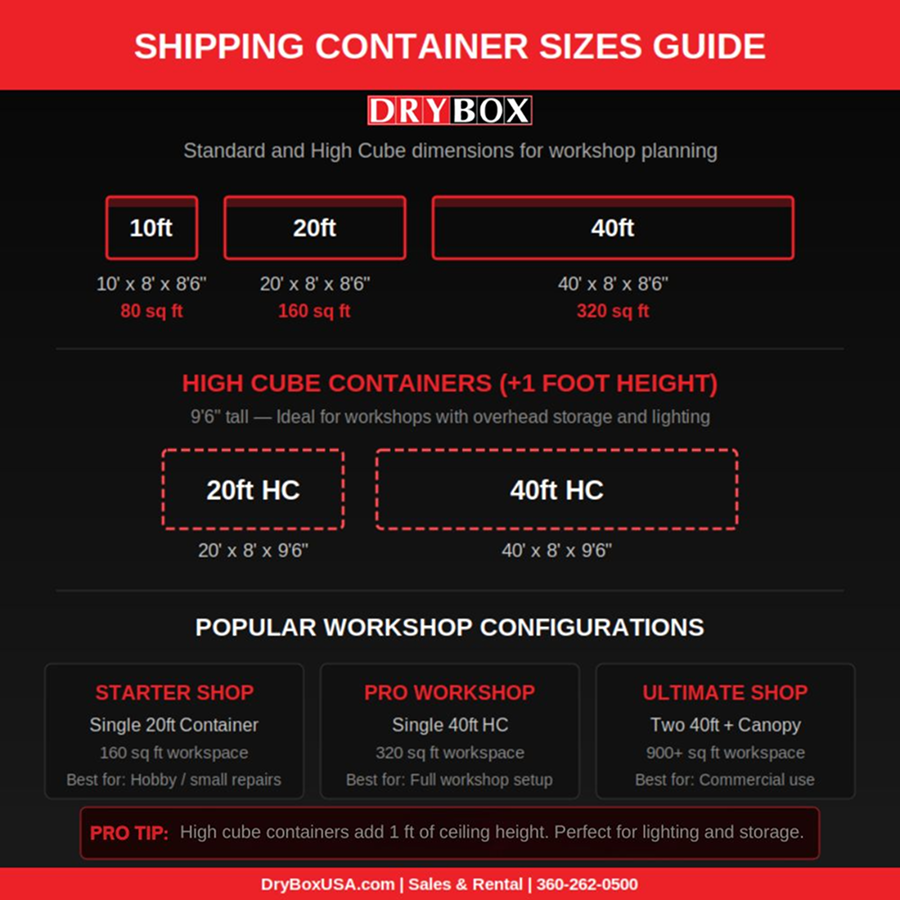
For a storage container workshop, the High Cube option is almost always the better choice. That extra foot of ceiling height gives you room for overhead lighting, shelving, and ventilation ducting. Dry Box carries containers in a range of sizes including 10ft containers, 20ft containers, and 40ft containers to suit workshops of every scale.
The walls are made from 14-gauge Corten steel, which naturally resists rust and corrosion. The floor is typically marine-grade plywood over steel crossmembers. This combination creates a structure that is surprisingly well-suited for conversion into a shipping container shop.
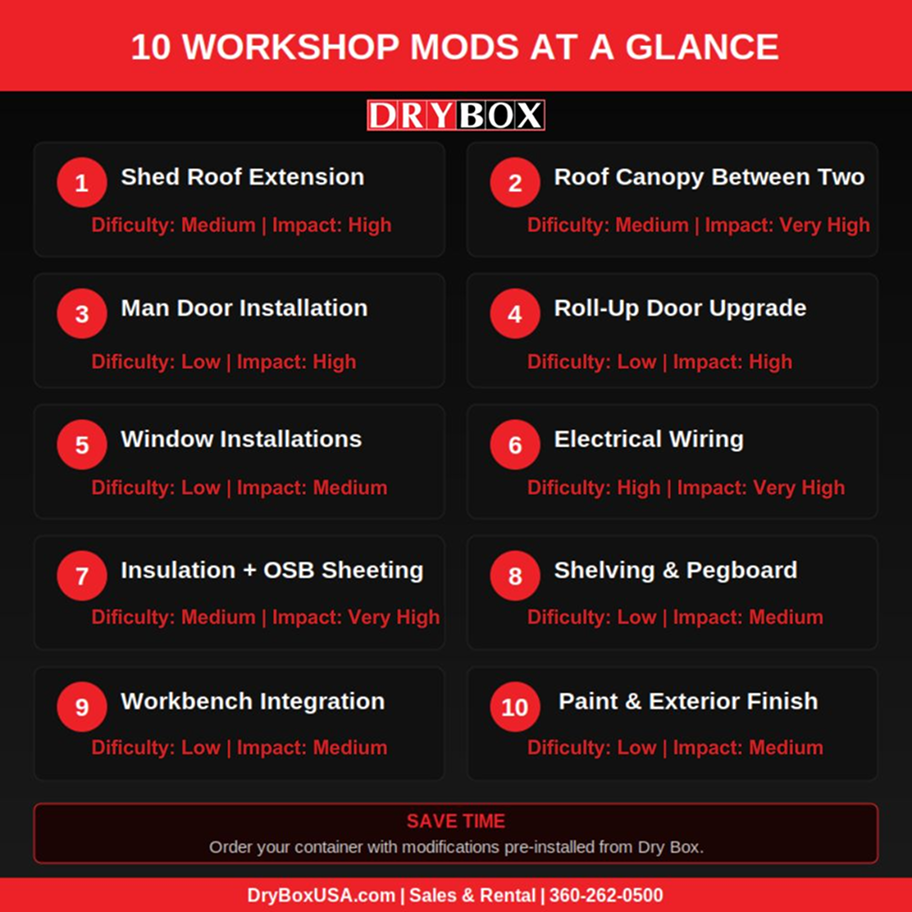
1. Shipping Container Shed Roof Extension
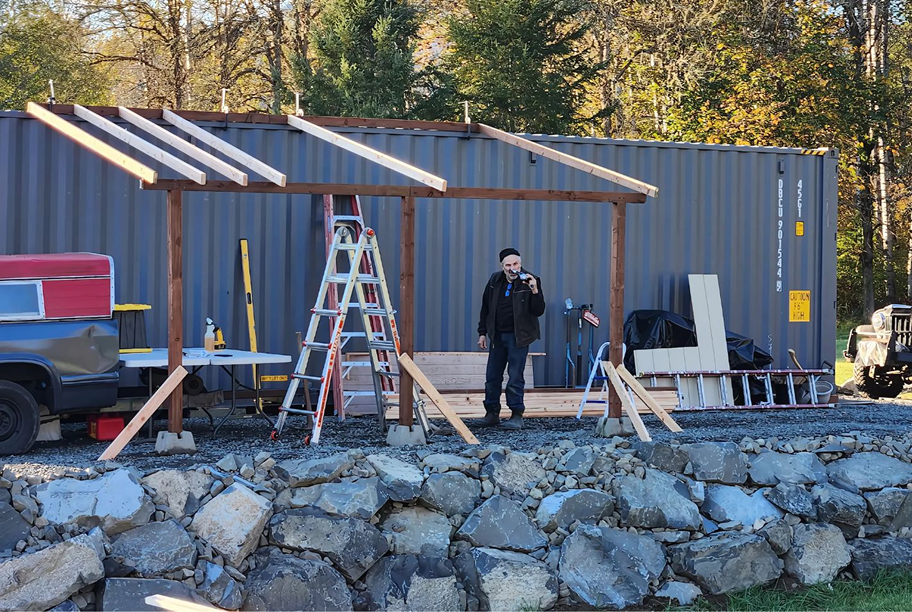
A shipping container shed roof is one of the most impactful modifications you can make. This involves welding or bolting a sloped metal roof structure off one long side of the container. The roof extends outward 8 to 12 feet and is supported by steel posts anchored to the ground.
The shed roof creates a covered area alongside your container where you can work on larger projects without being fully exposed to rain or sun. Picture pulling a vehicle under the overhang for an oil change while your tools stay dry and organized inside. It effectively doubles your usable workspace without doubling your cost.
Most builders use galvanized steel roofing panels for the shed roof because they match the industrial look and last for decades. For professional fabrication of shed roof attachments, check out Dry Box's container modifications to see what is possible.
2. Roof Canopy Between Two Containers
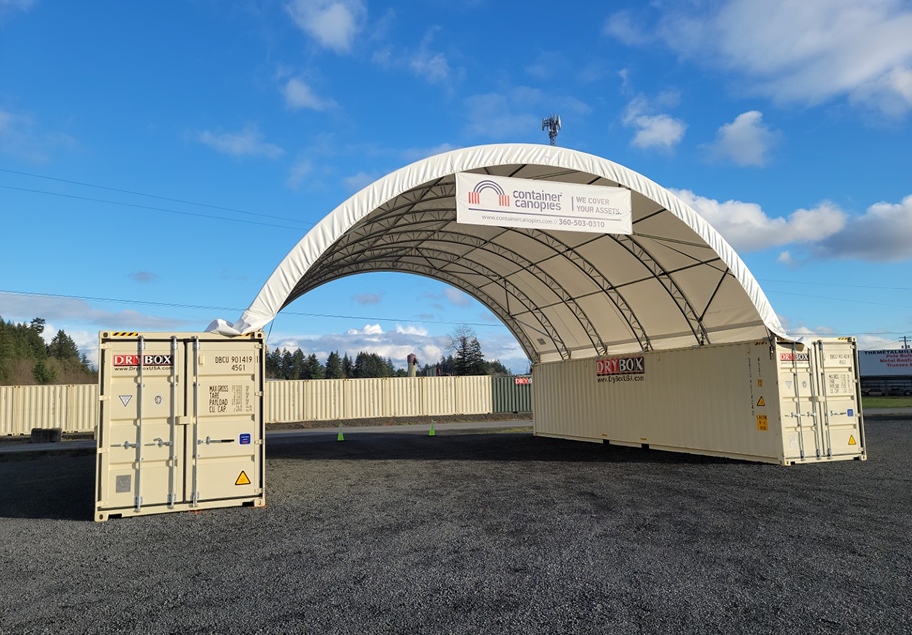
If you really want to maximize your shipping container workshop, place two containers parallel to each other with 12 to 20 feet of space between them. Then install a storage container roof spanning the gap. This layout gives you a massive covered workspace in the center with enclosed storage and work areas on each side.
A shipping container canopy is a game-changer for anyone who needs room to work on large equipment, boats, or vehicles. The two containers act as anchor points and side walls, so you only need a front-to-back roof structure to complete the covered zone.
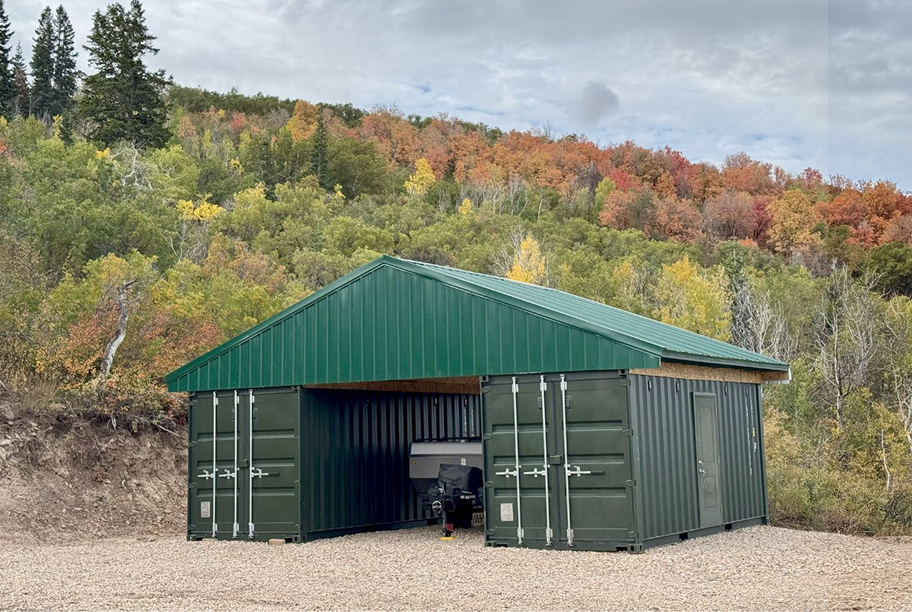
Some owners enclose the ends of the canopy with roll-up doors or tarps for full weather protection. Others leave them open for easy drive-through access. This is one of the most popular shipping container workshop ideas for farms, ranches, and rural properties.
3. Shipping Container Man Door Installation
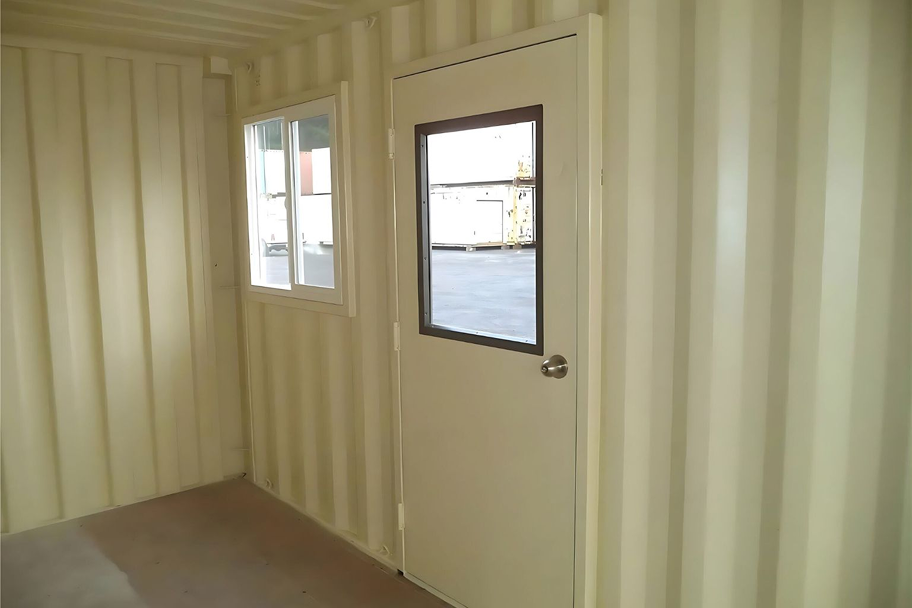
The original cargo doors on a shipping container are heavy and wide. They work great for loading equipment, but swinging open two massive steel doors every time you need to grab a wrench is not as practical. That is where a shipping container man door comes in.
A man door is a standard-sized personnel door cut into the side or end of the container. It gives you quick, everyday access to your container shop without having to wrestle with the full cargo doors. Most fabricators install a steel frame and a commercial-grade exterior door that locks securely.
Dry Box offers pre-installed shipping container door options so your unit arrives ready to use. Placing the man door on the long side wall near one end is the most common configuration for workshops.
4. Roll-Up Doors for Easy Access
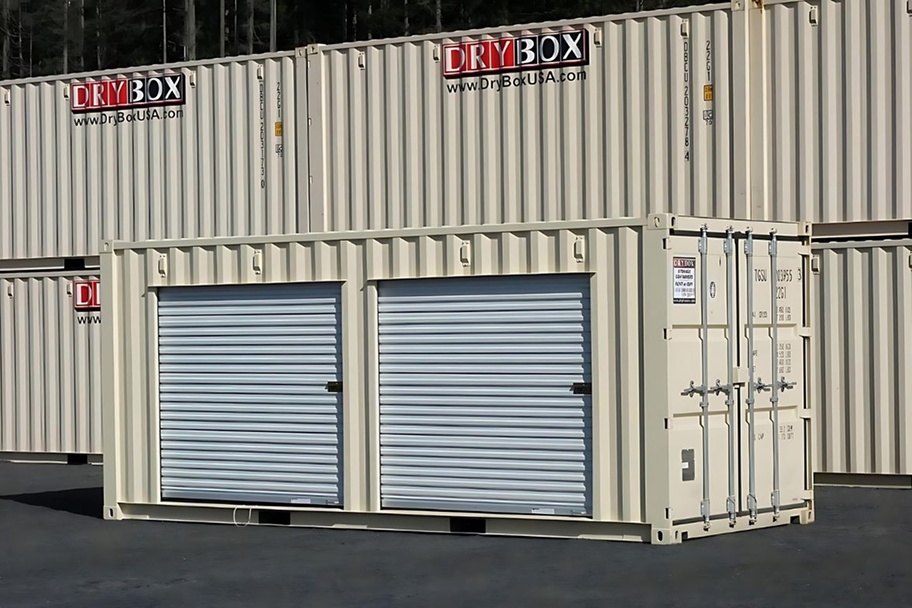
A roll-up door is a must-have modification for any shipping container workshop that will see regular use. These doors are similar to what you see on storage units or small commercial garages. They roll up overhead and out of the way, giving you a clean, wide opening.
Roll-up doors come in various widths, with 7-foot options being the most popular for container shops. A 7-foot-wide door lets you drive an ATV, riding mower, or motorcycle straight inside. For larger equipment, some owners install a 10-foot roll-up on a 40ft High Cube container.
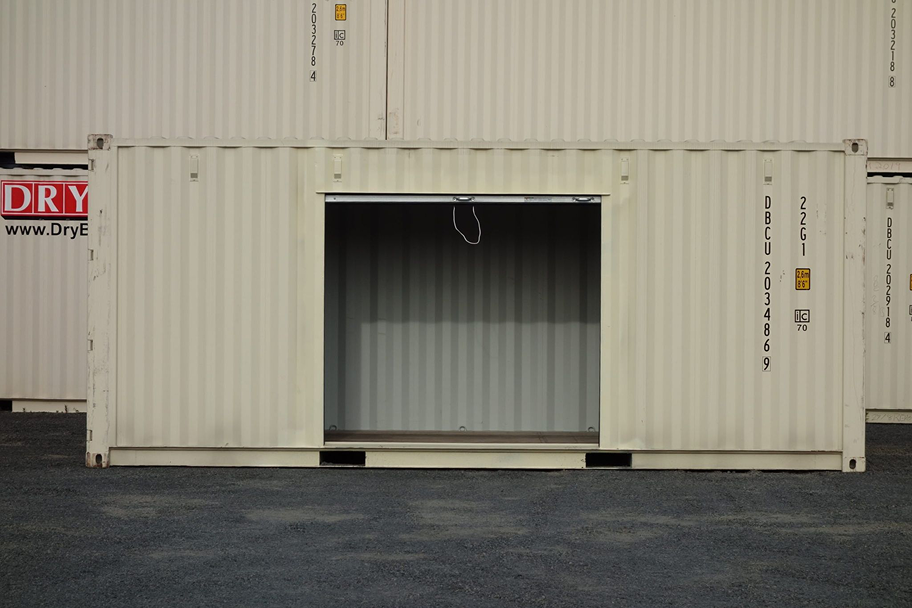
You can place roll-up doors on the side wall, the end wall, or both depending on your shipping container workshop plans. Browse standard modifications from Dry Box for pre-engineered roll-up door options.
5. Shipping Container Windows for Light and Airflow
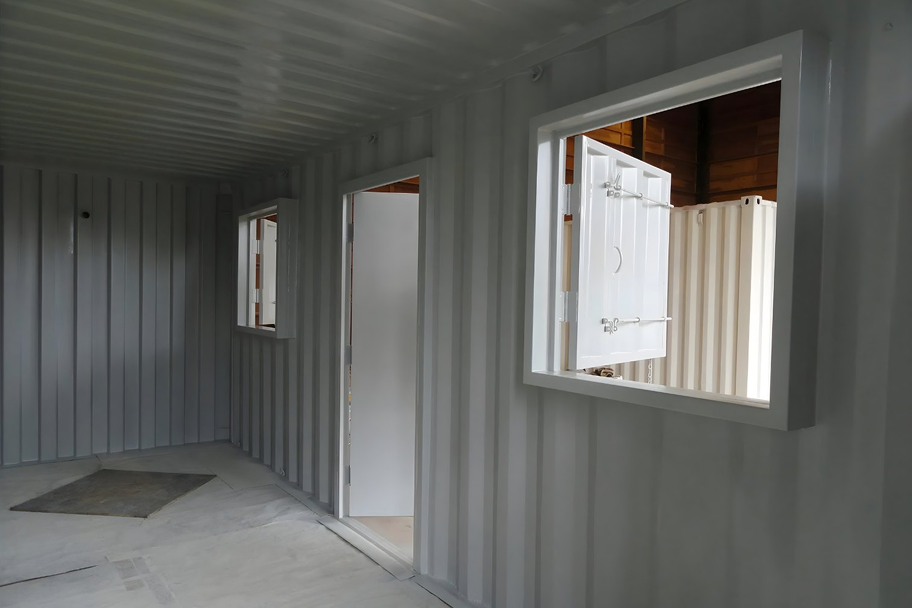
Working inside a sealed steel box without natural light is no fun. Shipping container windows solve this problem and bring your workshop to life. Most window installations involve cutting a rectangular opening in the container wall and welding in a steel frame to hold a standard window unit.
Sliding windows are popular for workshops because they provide ventilation and are easy to operate with dirty hands. Placing windows on opposite walls creates cross-ventilation that helps clear fumes and keeps the interior comfortable during warm months.
For security, many workshop owners choose windows with tempered glass and lockable latches. You can also add window bars or steel mesh for extra protection. Just two or three well-placed windows can transform a dark container into a bright, inviting workspace.
6. Electrical Wiring and Panel Setup
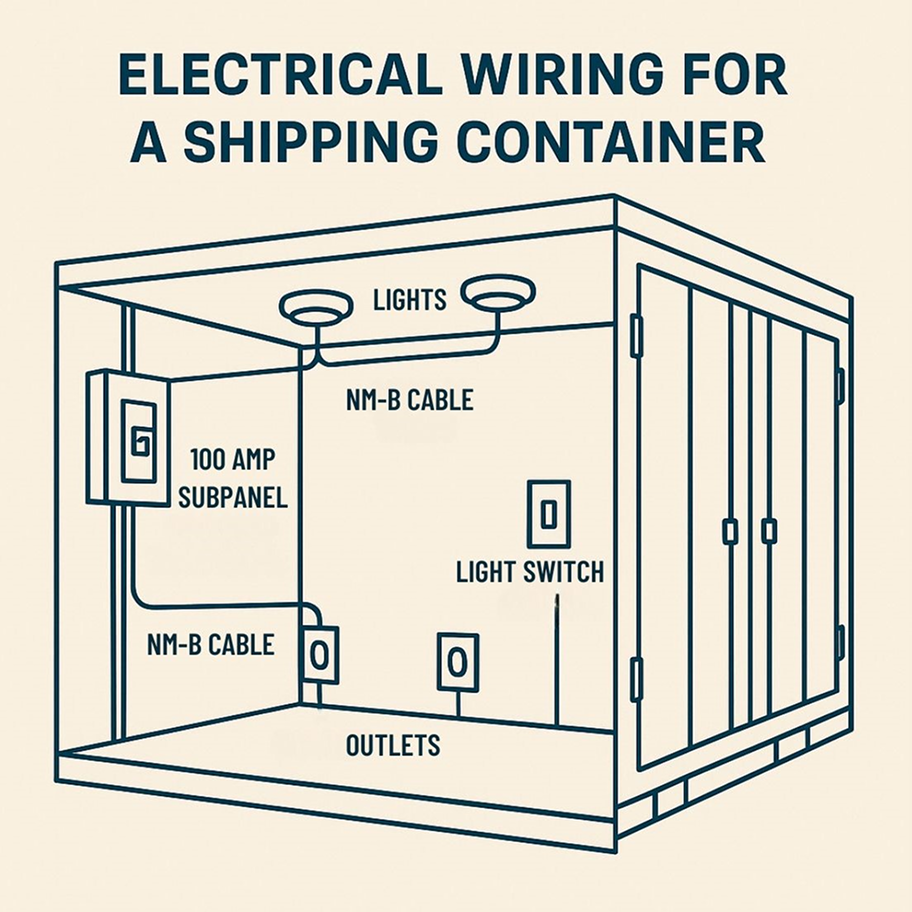
Adding electricity to a shipping container turns it into a real shop. A proper electrical installation starts with a licensed electrician adding a sub-panel mounted inside the container, fed from your main property panel or a dedicated meter. From there, you can run circuits for outlets, lighting, and dedicated tool lines.
Plan for at least two 20-amp circuits for power tools and a separate circuit for lighting. If you will be running a welder, air compressor, or other heavy-draw equipment, you'll need a 240-volt service.
Consult a licensed electrician for any level of electric installation.
OSHA's electrical safety standards provide guidance on wiring methods and grounding that apply to workshop environments.
LED shop lights are the go-to choice for container workshops because they produce bright, even light without generating much heat. Mount them to the ceiling ribs of the container for clean, overhead coverage across the entire workspace.
7. Insulated Shipping Container with OSB Interior

Shipping container insulation is essential if you plan to use your workshop year-round. Without insulation, a steel container becomes an oven in summer and a freezer in winter.
The most common approach is closed-cell spray foam applied directly to the interior walls, ceiling, and sometimes the floor.
Spray foam insulation does double duty. It controls temperature and also creates a moisture barrier that prevents condensation from forming on the cold steel walls. A 2-inch layer of closed-cell foam provides roughly R-14 insulation value, which is more than enough for most workshop settings.
After the foam cures, the interior is finished with OSB (oriented strand board) sheeting screwed to furring strips. OSB gives you a solid surface to mount shelving, pegboard, electrical outlets, and anything else you need. It also gives the space a much more finished, professional look compared to bare steel.
If you are planning a full build-out, Dry Box can help coordinate special project modifications that include insulation and interior finishing.
8. Workshop Shelving Ideas for Maximum Storage
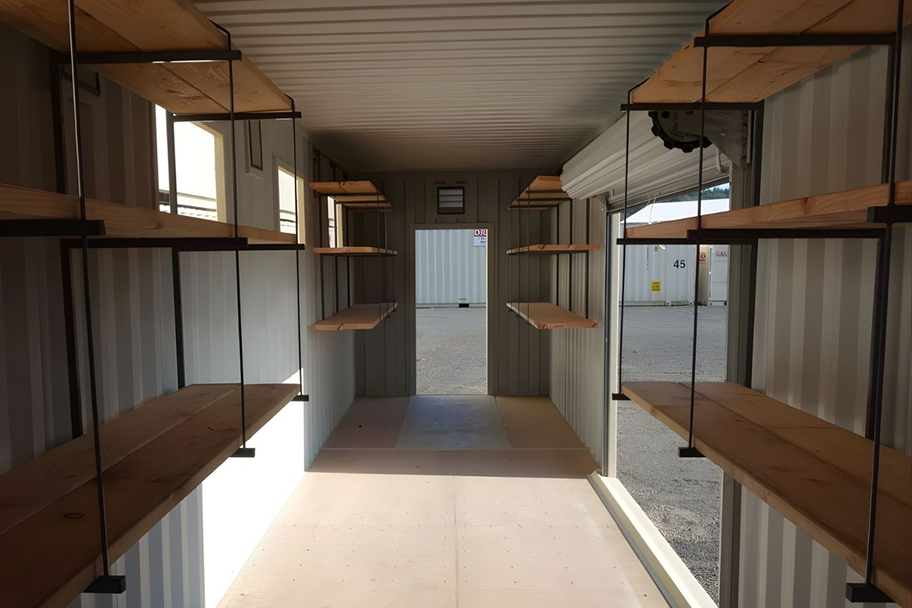
Organization is what separates a productive workshop from a cluttered storage unit. Smart shipping container shelving ideas make the most of the vertical space inside your container, which is where most beginners leave square footage on the table.
Heavy-duty steel shelving units are the backbone of any storage container workshop. Mount them to the container walls using bolts through the corrugated steel for a rock-solid hold. If your container has an OSB interior, use through-bolts with backing plates rather than relying on screws alone.
Pegboard is another excellent wall storage option. It is affordable, easy to install over OSB sheeting, and lets you rearrange your tool layout whenever you want. Magnetic tool strips, overhead ceiling racks for lumber storage, and fold-down workbenches round out a complete container shop storage system.
9. Built-In Workbench and Tool Stations
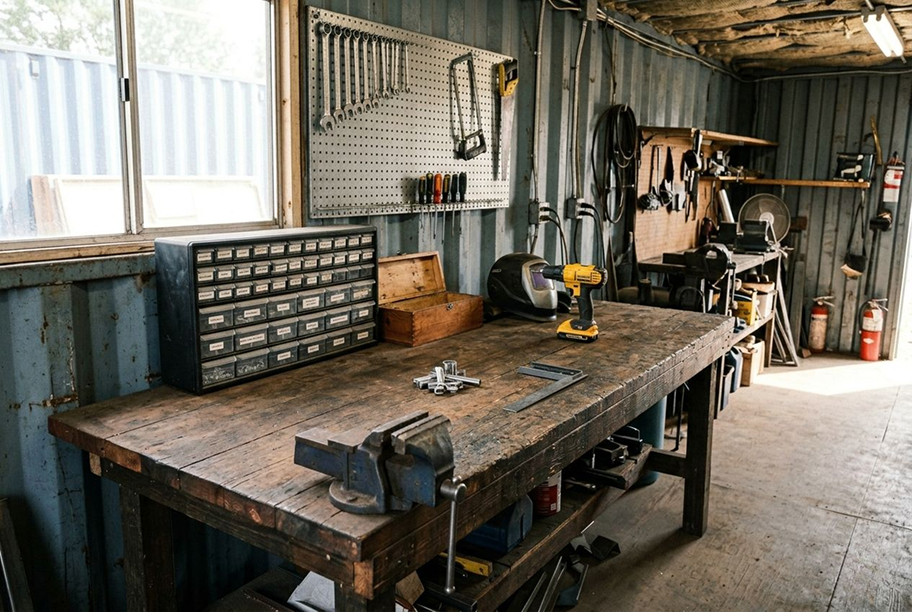
A dedicated workbench is the heart of any shipping container shop. Building a bench directly into the container creates a permanent, stable work surface that does not eat up valuable floor space the way a freestanding bench can.
The most efficient layout places a heavy-duty workbench along one of the long walls, leaving the center aisle clear for moving materials and equipment. Attach the bench frame directly to the container's steel wall studs for maximum rigidity. A butcher-block or heavy plywood top provides a durable work surface.
Under-bench storage drawers and cabinets keep your most-used tools within arm's reach. If your container shop serves double duty for different tasks, consider a bench with a built-in vise on one end and a clear assembly area on the other.
10. Exterior Paint and Rust Protection

The last item on this list is the easiest to overlook, but it matters. A fresh coat of industrial paint protects your container from rust and gives the whole setup a clean, professional appearance. Corten steel is naturally resistant to corrosion, but scratches, dents, and weld points from modifications need extra attention.
Start with a rust-inhibiting primer on any bare metal, then apply a top coat of marine-grade or DTM (direct-to-metal) paint. Choose a light color if your container sits in direct sun, since lighter shades reflect heat and keep the interior cooler. Many owners match their container paint to existing outbuildings for a cohesive look on the property.
Dry Box offers containers in a variety of conditions and colors. If you want to start with a clean slate, browse new one-trip containers that arrive in near-perfect condition and are ready for your custom paint scheme.
Putting Your Shipping Container Workshop Plans Together
The beauty of a shipping container workshop is that you do not have to do everything at once.
Start with the basics, such as a man door and roll-up door, then add insulation, electrical, and shelving as your budget allows. Each of these 10 modifications stands on its own, but together they create a workspace that rivals a traditional stick-built shop at a fraction of the cost.
Before you start, check with your local building department about permits and zoning requirements for placing a container on your property. Regulations vary by county and city, so a quick phone call can save you headaches later.
Ready to get started? Request a free quote from Dry Box for a container that fits your workshop vision. From bare units to fully modified shipping container shops, the team at Dry Box can help you plan and execute your build from start to finish.
Frequently Asked Questions
- How much does it cost to convert a shipping container into a workshop?
-
The total cost depends on the size of the container and the modifications you choose. A basic setup with a man door and roll-up door on a used 20ft container might run $4,000 to $6,000 all in.
A fully insulated and wired 40ft High Cube with shelving, windows, and a shed roof extension could range from $10,000 to $20,000. Compared to building a traditional workshop from the ground up, a container conversion often costs 30 to 50 percent less.
- Do I need a building permit for a shipping container workshop?
-
In most areas, yes. Building codes and zoning regulations vary widely from one jurisdiction to the next. Some rural counties allow containers with minimal paperwork, while cities may require full building permits, site plans, and inspections.
Always contact your local planning department before placing a container on your property to find out what is required.
- Can I stack two shipping containers to create a two-story workshop?
-
Shipping containers are engineered to be stacked up to nine units high when fully loaded, so structurally they can handle it. However, a two-story workshop introduces challenges if you start cutting holes in walls and making other modifications.
Most residential workshop owners find that a single-story layout with a roof canopy or shed roof extension provides plenty of space without the added complexity.
- How do I prevent condensation inside my container workshop?
-
Condensation forms when warm, moist air inside the container meets the cold steel walls. The best solution is closed-cell spray foam insulation, which acts as both a thermal barrier and a vapor barrier.
Proper ventilation through windows, exhaust fans, or ridge vents also helps control moisture. Running a small dehumidifier during humid seasons provides an extra layer of protection for your tools and equipment.
- What is the lifespan of a shipping container workshop?
-
A well-maintained shipping container can last 25 years or more in a stationary workshop application. New one-trip containers with minimal wear can last even longer.
The key factors are keeping the exterior painted to prevent rust, maintaining the roof seals, and ensuring proper drainage around the base so water does not pool against the walls. Many container owners report their units lasting 30-plus years with routine care.
Dry Box provides storage container rentals and new and used shipping containers for sale with professional modifications across Washington, Oregon, Idaho, Montana, Utah, Nevada, Colorado, Wyoming, and Florida. Call 360-262-0500 or visit DryBoxUSA.com to get your free quote today.
Call us today or fill out our quote form here.