Top 5 Outdoor Storage Solutions For Backyards
Your backyard is working overtime. Lawn equipment, bikes, and seasonal gear all need a home that protects them from rain, sun, and sticky fingers. The right outdoor storage keeps your property organized and extends the life of everything you own.
Finding the best outdoor storage solutions depends on what you own and how serious you are about security. This guide breaks down the top five options and shows where shipping containers stand above the rest.
Why Outdoor Storage Matters
A cluttered garage slows you down every time you need a tool and puts expensive gear at risk. Weather is the silent killer of unprotected equipment. A proper outdoor storage unit pays for itself by protecting thousands of dollars in tools and toys.
For homeowners who want premium protection without a big upfront cost, a Dry Box rent-to-own storage container allows you to own a shipping container with low monthly payments. That makes heavy-duty storage accessible for almost any budget.
According to the U.S. Consumer Product Safety Commission, fuel and lawn equipment should be stored in well-ventilated areas away from living quarters and ignition sources.
A dedicated outdoor storage space protects both your gear and your family. That is one more reason proper storage is worth the investment.
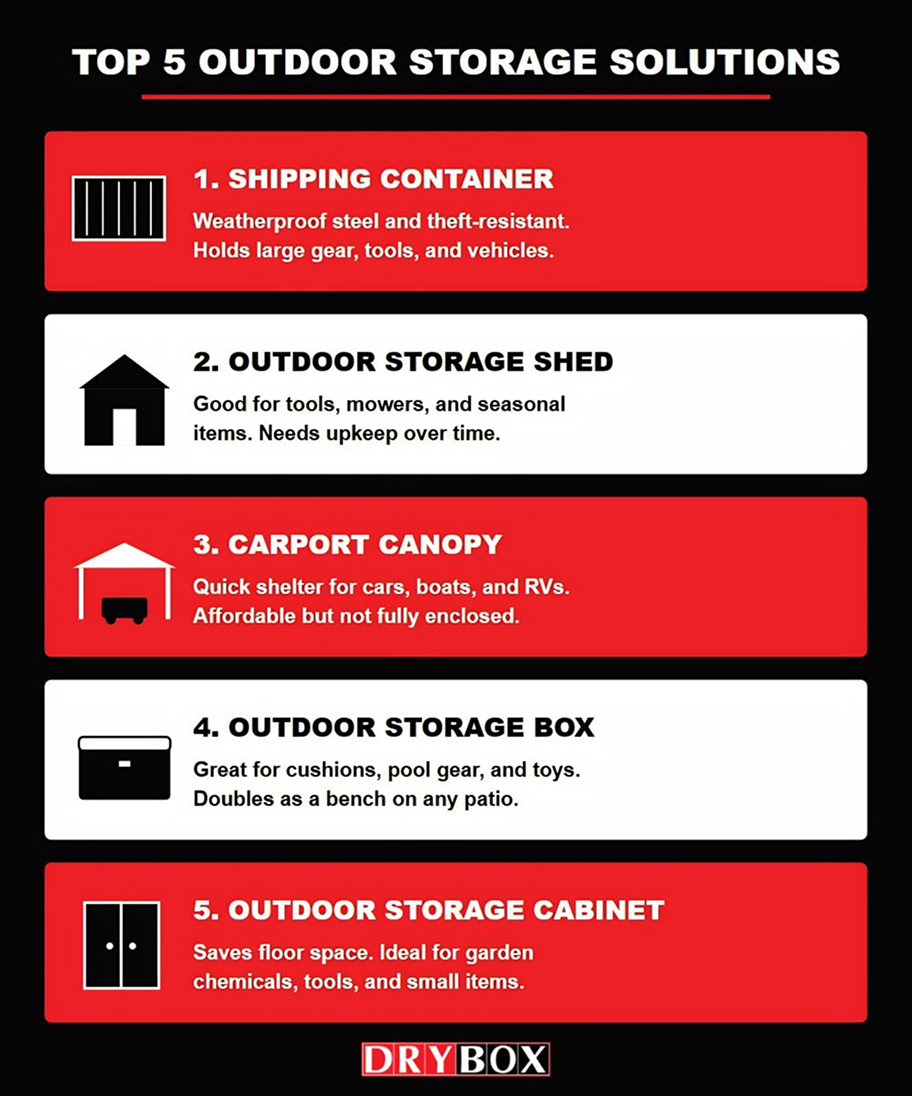
1. Shipping Container Storage: The Premium Outdoor Storage Solution
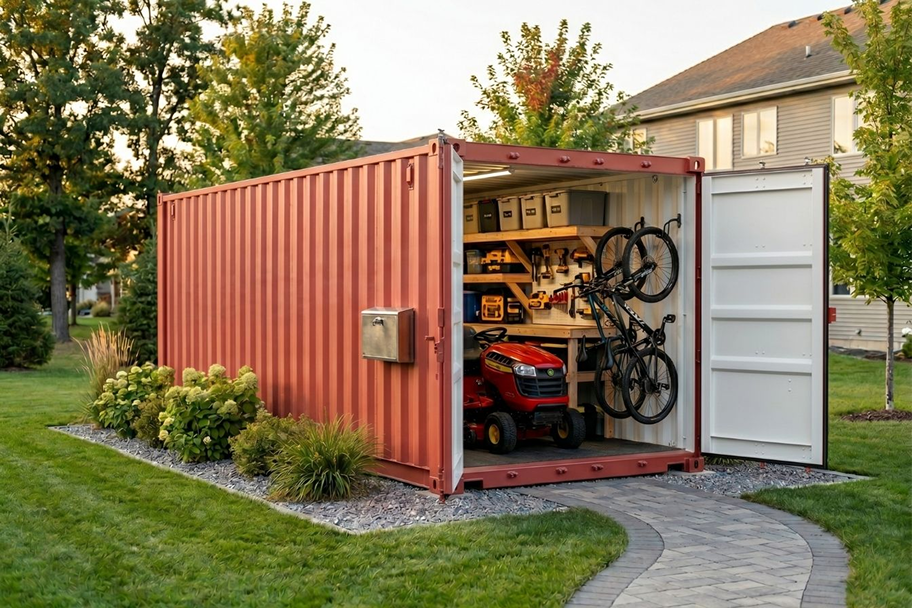
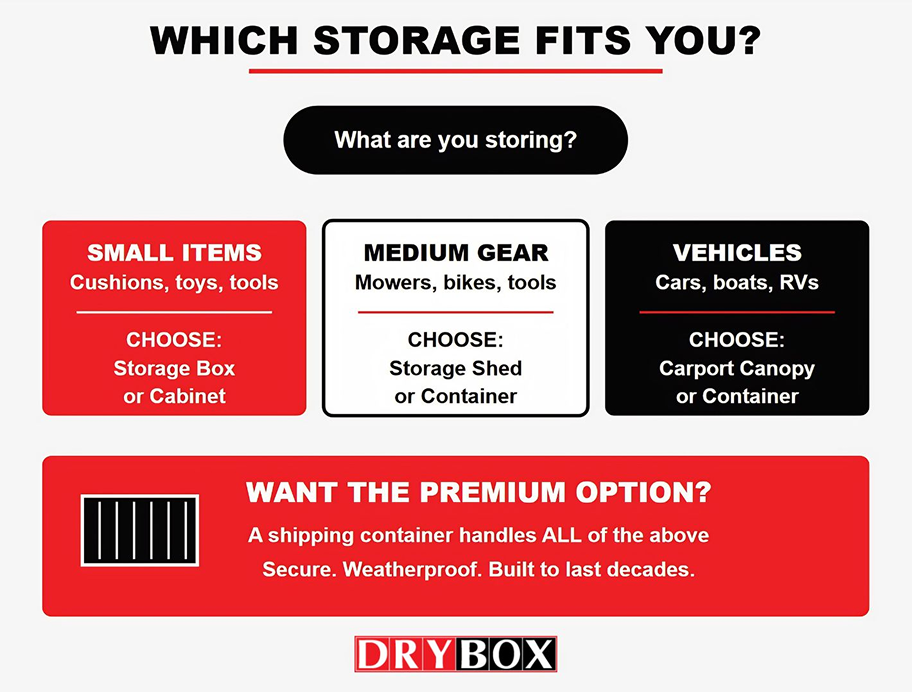
If you want the best outdoor storage on the market, shipping container storage wins across the board. These steel units were built to cross oceans, so a rainy week in your backyard is nothing to them. They set the gold standard for durability, security, and capacity.
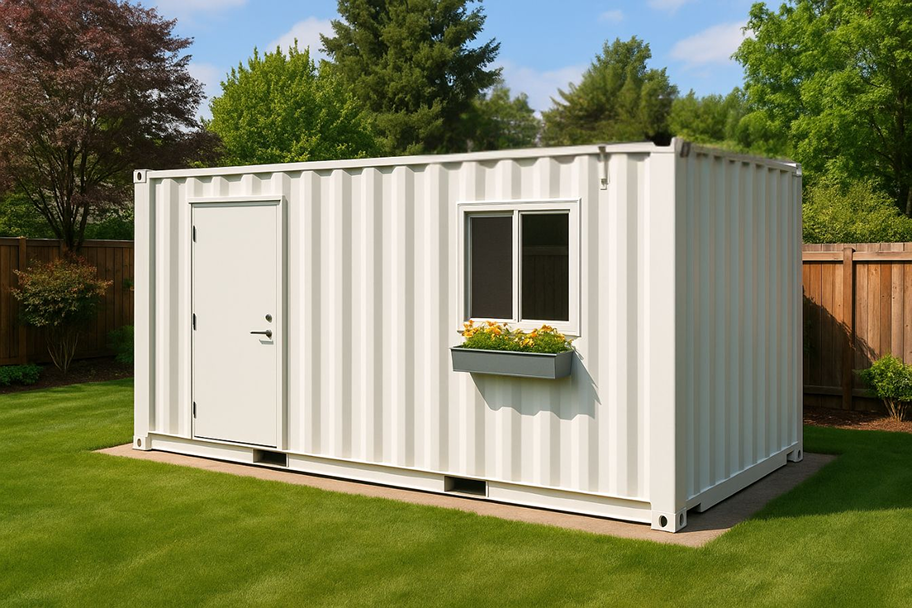
A standard 20ft storage container gives you 160 square feet of space, and 40-foot containers double that. The solid steel walls resist theft, pests, fire, and extreme weather. You can store a car, a motorcycle, a riding mower, and a full tool collection inside one unit.
Shipping containers are also the top pick for outdoor boat storage and outdoor car storage. 10ft containers are the perfect motorcycle storage pod.
You can also get custom shipping containers with things like shelving, lighting, roll-up doors, man doors and locking systems. For homeowners who want one solution that handles everything, nothing else comes close.
Pros: Unmatched security, extreme durability, massive capacity, low maintenance, customizable interiors, adds long-term value to your property.
Cons: Higher upfront cost than a small shed (unless renting or rent-to-own), requires level ground for placement, larger footprint than backyard boxes.
2. Outdoor Storage Shed: The Classic Backyard Pick
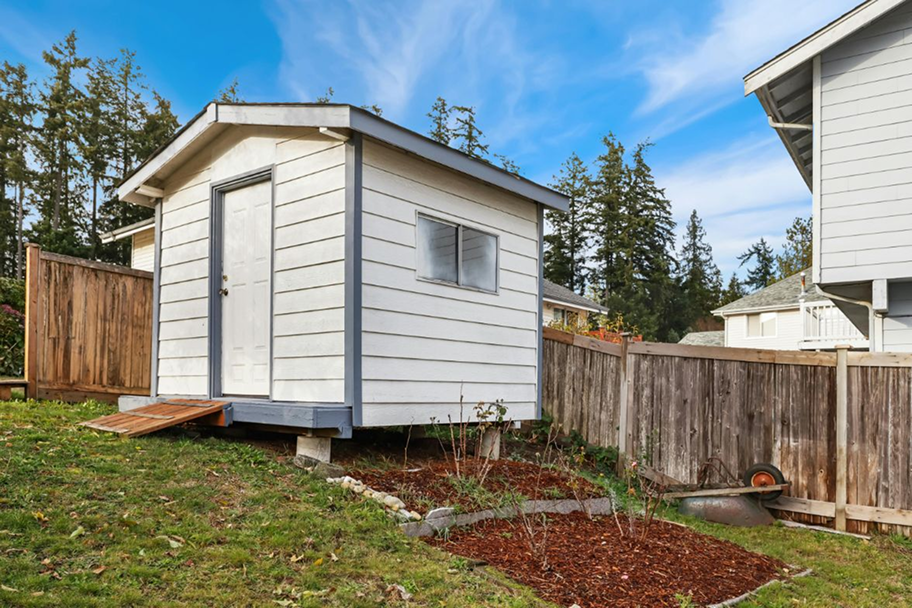
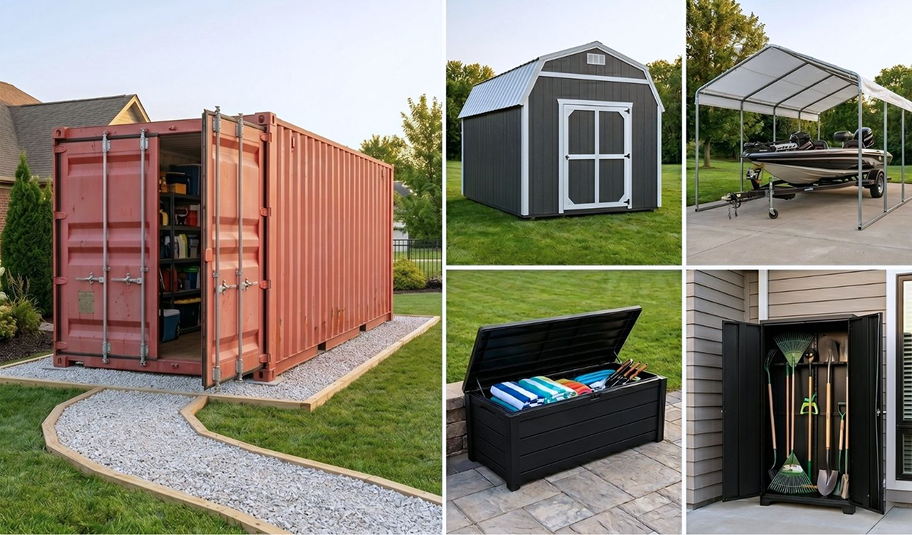
An outdoor storage shed is the most recognizable storage option in American backyards. Sheds come in wood, resin, and metal, with sizes ranging from tiny lean-tos to a large shed big enough for a workshop. They hit a familiar middle ground between cost and capacity.
Sheds are excellent for lawn mower storage, garden tools, and seasonal items. A quality resin shed resists rot and pests better than wood, while metal sheds are affordable but can dent and rust. Most traditional sheds need re-staining or roof repairs after ten to fifteen years.
They also provide less security than steel containers since walls and doors can be pried or cut. Still, for general backyard use, a shed remains a solid choice. Look into a shipping container shed for a more durable option.
Pros: Familiar style, blends into yards easily, many size and material options, moderate price range.
Cons: Requires maintenance, less secure than steel, shorter lifespan, vulnerable to heavy storms.
3. Carport Canopy: Open-Air Outdoor Car Storage
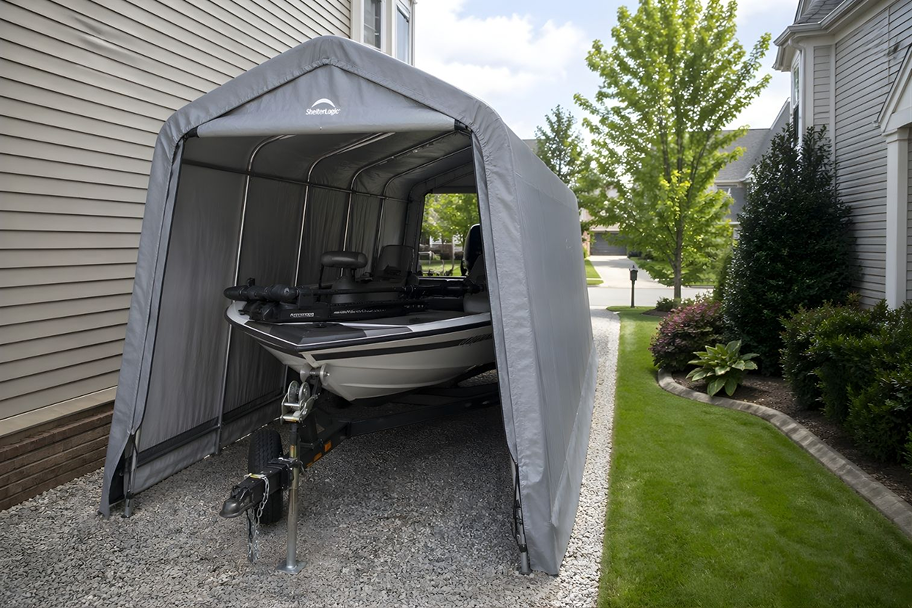
A carport canopy is the fastest way to add overhead protection to your property. A canopy carport uses a steel frame and a heavy fabric or metal roof to shield vehicles and equipment from sun and rain. Installation is usually a weekend project.
Carport canopies work well for homeowners who need quick outdoor car storage without building a garage. They are also popular for protecting ATVs, firewood stacks, and patio furniture.
For a heavy-duty upgrade, a shipping container canopy pairs two containers with a permanent steel roof to cover boats, RVs, or tractors while also giving you locked storage or workshops on both sides.
The trade-off with a standard fabric carport is security and full weather protection. Since the sides are open, wind-driven rain and theft remain concerns. Think of a carport canopy as a roof, not a vault.
Pros: Low cost, quick setup, great for vehicles and large equipment, portable designs available.
Cons: Open sides offer no security, fabric roofs wear out, not ideal for valuables or long-term storage.
4. Outdoor Storage Box, Bench, or Cabinet
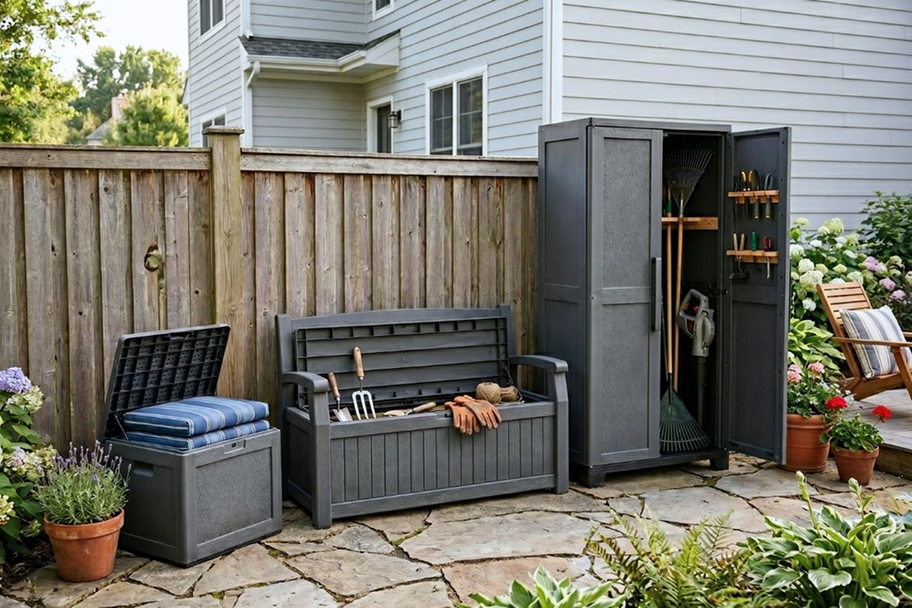
For smaller spaces, an outdoor storage box or bench offers a clever two-in-one function. These are usually made from weather-resistant resin, wood, or metal, and they fit on patios and decks. Many double as seating, which makes them a favorite for small yards.
An outdoor storage bench keeps pool towels, grilling tools, and garden gloves in easy reach. An outdoor storage cabinet goes vertical, freeing up floor space while holding taller items like rakes. Outdoor cabinet storage is especially useful in tight side yards.
These options are budget-friendly and easy to assemble. They work best as a complement to a larger solution rather than a standalone answer.
Pros: Affordable, space-saving, attractive designs, quick setup, useful for small patios and apartments.
Cons: Limited capacity, lighter materials can crack in extreme cold, not suitable for large equipment.
5. Large Shed or Barn-Style Structure
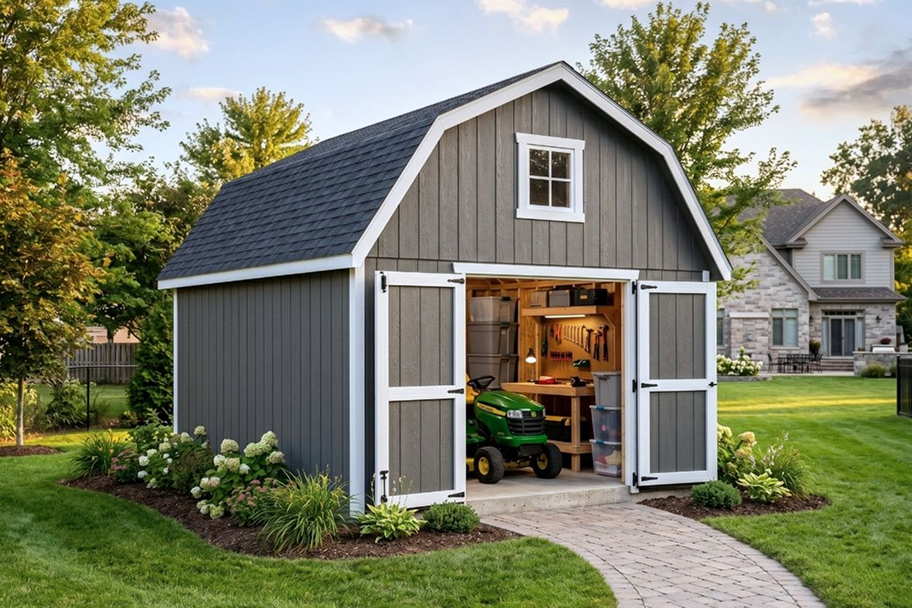
A large shed sits in the middle of the road between a standard shed and a shipping container. These structures often include wider doors, loft storage, and enough room to park a small vehicle. They suit homeowners who want the look of a traditional building.
Large sheds handle lawn mower storage, garden tractors, workshop setups, and even light motorcycle parking. Curb appeal is a main draw since they can match your home's siding and paint.
That said, a comparable storage container rental often offers more space for the same money with none of the maintenance and can be converted to a container barn if keeping livestock.
The downside of large sheds comes from construction cost, permits, and time. A quality large shed often costs as much as a container but offers less security and a shorter lifespan. For pure protection and longevity, steel still wins.
Pros: Attractive appearance, customizable, big interior space, integrates with home style.
Cons: Higher cost, needs permits in many areas, less secure than steel, wood requires ongoing maintenance.
Tips for Integrating Outdoor Storage Into Your Backyard Layout
A storage unit should solve a problem, not create a new one. Planning the placement before purchase keeps your yard looking open and organized. Here are practical tips that work for any option on this list.
Measure Before You Buy
Walk your yard with a tape measure and mark the exact footprint of the unit you want. Leave at least three feet of clearance on all sides for airflow, maintenance, and door swing. Check local zoning rules for setback distances from property lines.
Match the Style to Your Home
Paint a shipping container to match your trim, or pick a shed color that blends with your siding. Landscaping with shrubs and climbing plants softens large structures. Thoughtful styling turns modified outdoor storage containers into a design feature instead of an eyesore.
Plan for Access and Workflow
Place storage near the area where you use the items most. A garden shed belongs near the garden, and outdoor boat storage belongs near the driveway or a side gate. If you are planning a shipping container delivery, walk the route ahead of time so the truck has clear access to your chosen spot.
Think About Utilities Early
If you might add lighting or ventilation later, choose a location near existing electrical runs. Slope the ground slightly away from the unit so rainwater drains cleanly. Good site prep protects your investment for decades.
Frequently Asked Questions About Outdoor Storage Solutions
How long does a shipping container last in a backyard?
A quality shipping container can last 25 years or more with minimal care. Keeping the unit on a level base and touching up paint chips helps prevent rust. Many owners pass theirs down to the next generation.
Do I need a permit for outdoor storage on my property?
Permit rules vary by city and county. Some areas allow small sheds without a permit but require one for containers or large sheds over a certain size. Call your local building department before you buy to avoid fines.
Can outdoor storage be climate-controlled?
Yes. Shipping containers and larger sheds can be insulated, vented, and fitted with mini-split HVAC systems. This option is popular for storing electronics, artwork, wine collections, and sensitive tools.
What is the cheapest way to protect a car outside?
A basic carport canopy is the lowest-cost option for overhead car protection. For better security, a used shipping container often costs less per square foot than building a garage. Your choice depends on how long you plan to store the vehicle.
How do I keep pests out of my outdoor storage?
Seal any gaps around doors and vents with weather stripping or steel wool. Avoid storing food, birdseed, or pet supplies unless the unit is fully rodent-proof. Steel shipping containers are rodent proof and naturally resist pests better than wood sheds.
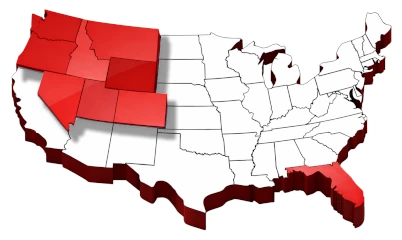
Dry Box provides storage container rentals and new and used shipping containers for sale with professional modifications across Washington, Oregon, Idaho, Montana, Utah, Nevada, Colorado, Wyoming, and Florida. Call 360-262-0500 or visit DryBoxUSA.com to get your free quote today.
Call us today or fill out our quote form here.