5 Shipping Container Uses at Festivals and Fairs
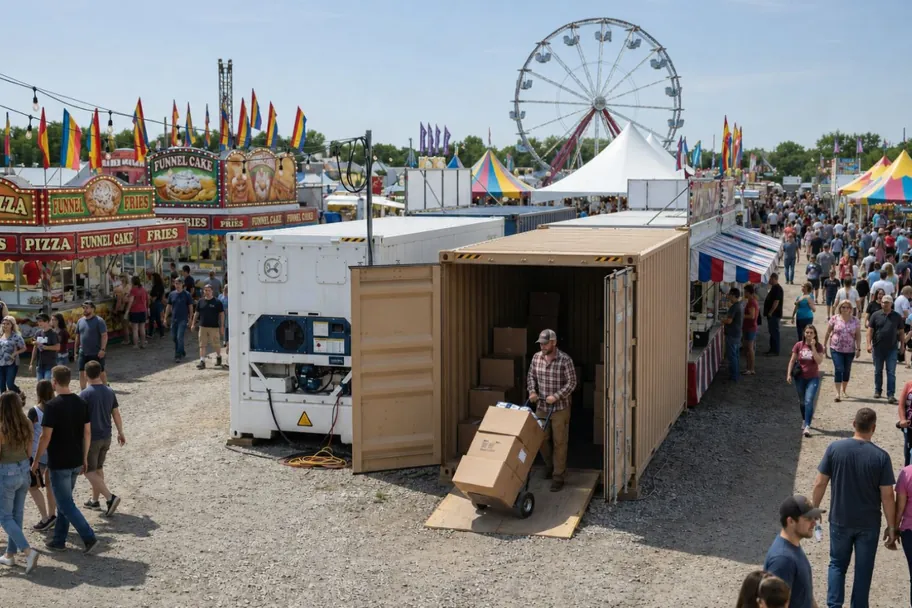
Shipping containers handle five major jobs at festivals and fairs. They provide locked vendor storage, ready-made pop-up shops, refrigeration for food vendors, ticket booths, and event site offices. Containers fit temporary events well because they sit at ground level, need no foundation, and are available as temporary rentals.
Every fairground has a hidden side. While crowds line up for cotton candy and carnival rides, thousands of dollars in merchandise, food, and equipment sit somewhere behind the scenes. The organizers who sleep well at night are the ones who put steel between their assets and trouble.
Think about what happens at 11 p.m. when the gates close. Sound equipment worth more than a car sits on an open stage, food trailers hold a weekend's worth of perishable stock, and the day's cash needs counting somewhere private. Steel cargo containers answer all three problems at once.
Below are the five container uses event planners ask about most, along with the unit that fits each job. The lineup covers everything from a single craft booth to a county fair with fifty vendors.
1. Vendor Storage That Actually Locks
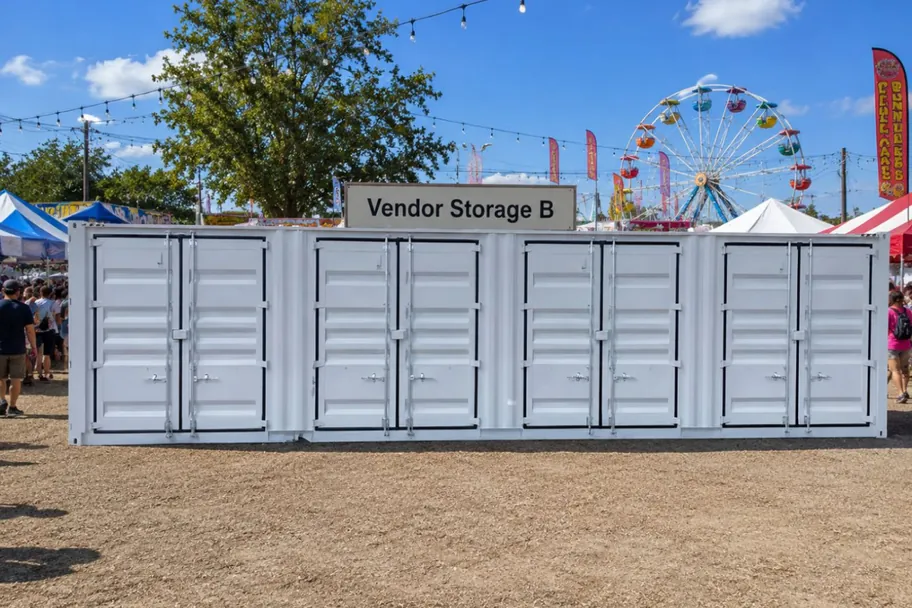
Side-door shipping containers like the one above are perfect for storage for multiple vendors.
Ask any vendor about their biggest worry at a multi-day event. It is rarely the weather. It is what happens to their inventory between closing time and the morning gates.
A 20ft storage container rental gives a vendor or vendor group about 1,100 cubic feet of lockable space. Corten steel walls and a recessed lockbox shrug off bolt cutters and curious hands. Inventory stays dry through summer storms that would flatten a canopy tent.
Tight on space between booths? A 10ft storage container slips into gaps a box truck cannot reach. Many fairs stage one small unit per vendor row, so restocking takes minutes instead of a hike to the parking lot.
Ground-level access matters more than most planners expect. Cargo doors open at grade, so a hand truck or pallet jack rolls straight in without a ramp. Vendors who load out at midnight after a long Saturday will thank you for that detail.
2. Pop-Up Shops People Remember
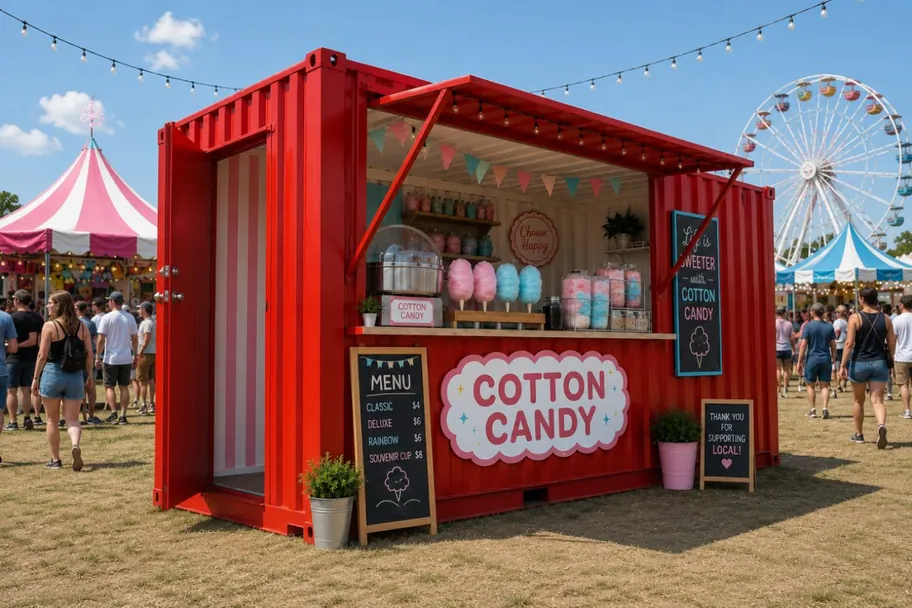
Shoppers walk past hundreds of vendors at a fair. They stop at a container shop because it looks intentionally unique.
Container modifications turn a plain steel box into a retail space with display windows, counters, lighting, and a serving hatch.
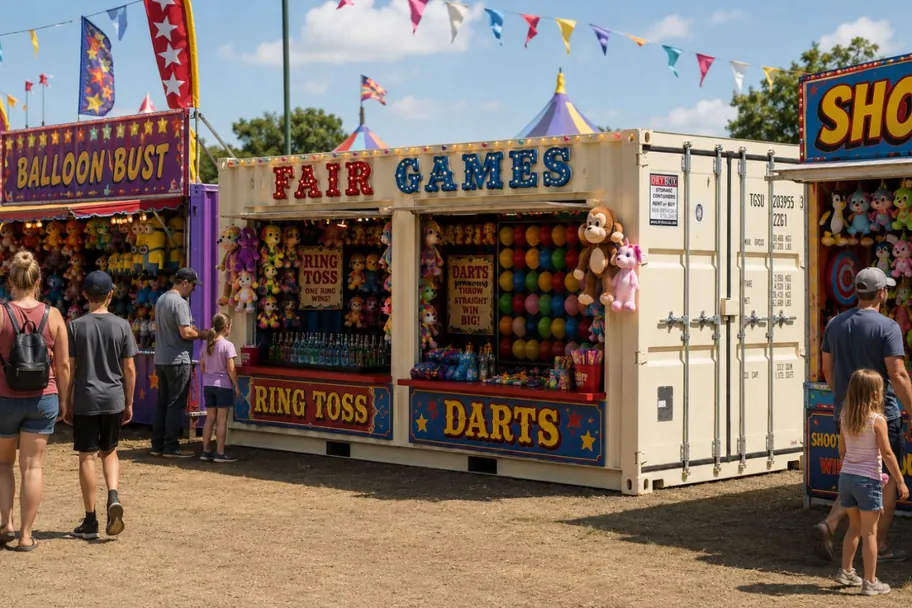
Roll-up container doors open an entire wall, so the shop feels inviting all day and seals shut at night.
Brands that tour the summer circuit often buy instead of rent. New and used shipping containers for sale can be customized once and hauled to every stop, which beats rebuilding a booth twelve weekends in a row.
The flat steel walls are a bonus most planners overlook. They take paint and vinyl wraps beautifully, so a sponsor logo can ride forty feet across the body of the container. A wrapped container earns photo posts that a folding table never will.
3. Refrigeration for Food Vendors
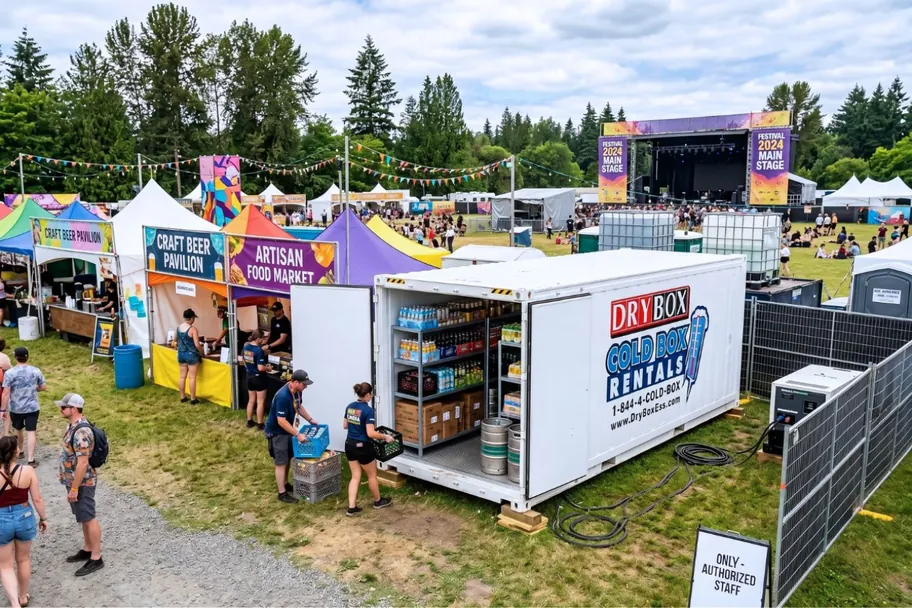
Food safety rules do not relax just because the kitchen is a tent. The USDA warns that bacteria multiply quickly between 40°F and 140°F, so cold food needs to stay at 40°F or below from delivery to the fryer.
Refrigerated containers solve the cold chain problem at the source. These plug-and-play reefer units hold a steady set temperature in any weather and store far more product than a row of rented coolers.
One 20ft reefer can back up an entire food court. Vendors restock between rushes instead of driving off-site, and the health inspector sees a monitored cold storage unit instead of melting ice chests.
Beverage vendors feel the math fastest. Buying bagged ice all weekend to babysit kegs and cases adds up quickly, while a reefer holds product at temperature for a flat rental rate. The unit also keeps backstock out of sight, which keeps the booth looking clean.
4. Ticket Booths and Gate Control
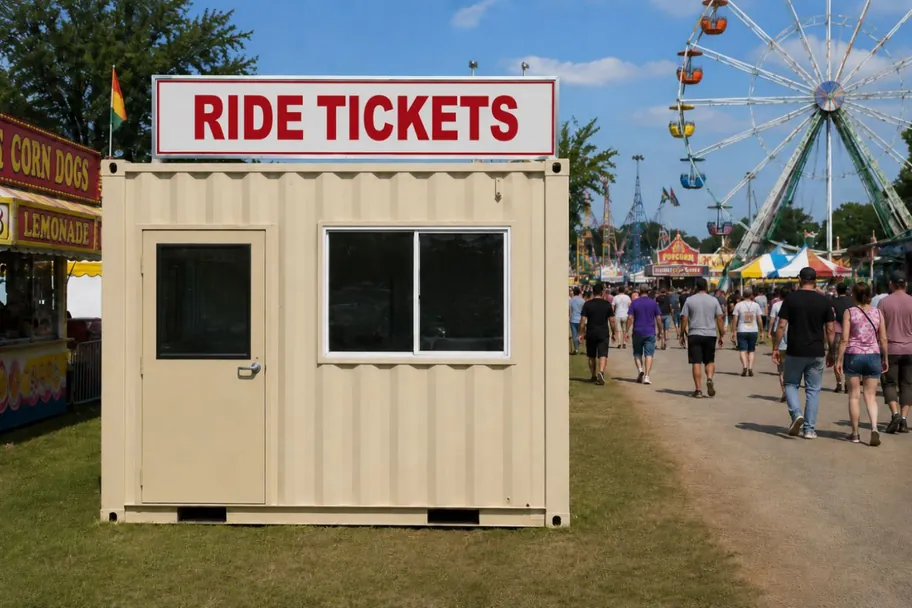
The ticket booth handles more cash than any other spot on the grounds. It deserves more protection than a folding table under a pop-up canopy.
A portable guard shack works as a ready-made ticket booth with a sliding service window, power, lighting, and a lockable steel door. Staff stay out of the sun and rain, and the till stays behind steel instead of canvas.
The same unit pulls double duty as a security checkpoint after hours. Park it at the main gate and the overnight crew gets real shelter with a clear view of the grounds.
Larger events often run two shacks side by side. One handles ticket sales while the other manages will-call and wristband exchanges, which keeps both lines moving on a busy Friday night.
5. An Event Site Office That Runs the Show
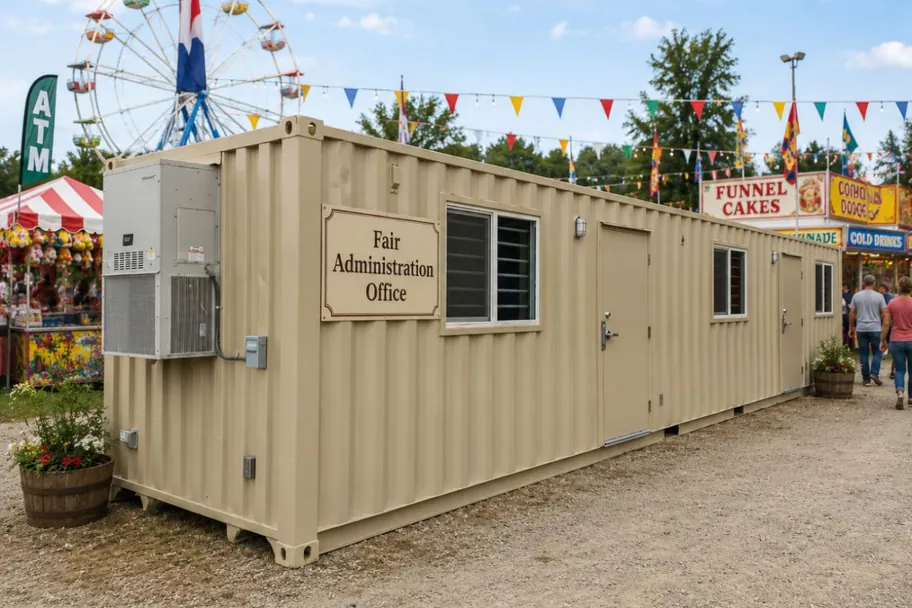
Every festival needs a command post. Radios, vendor paperwork, lost and found, and first aid supplies all need a home base with a door that closes.
Shipping container offices arrive ready to work, with insulation, electrical outlets, lighting, and climate control. The office sits at ground level, so there are no stairs, ramps, or trailer hitches to manage.
The 20ft mobile container office is the popular pick because it fits a desk, a meeting table, and shelving in one footprint. Larger events often park a storage unit beside it so operations and staging share one corner of the grounds.
The office earns its keep again at teardown. Contracts, deposits, and gate receipts stay locked inside while the crew breaks down the grounds around it, and the unit leaves on the last truck out.
Planning Container Logistics for Your Event
Order early. Fair season overlaps with construction season and moving season, so container yards run lean from May through September.
Walk the grounds before delivery day and mark a firm, level spot for each unit. Specialized container delivery trucks can place units in tighter spots than a standard trailer, but the driver still needs a clear path in.
Plan traffic flow when you mark those spots. Storage belongs behind the vendor rows, reefers belong near the food court with access to power, and the office belongs where staff can see the main gate. A smart layout on paper saves a hundred radio calls during the event.
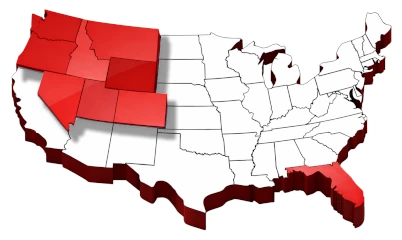
Dry Box rents and sells cargo containers, reefers, offices, and guard shacks across the Northwest, Mountain West, and Florida. Reserve your event containers before the season rush and the hidden side of your fairground will be the most organized part of it.
Frequently Asked Questions
How far in advance should I reserve containers for a festival?
Four to six weeks ahead is a safe window for summer events. Inventory tightens once fair season starts, and early orders get better delivery time slots.
What kind of ground does a cargo container need?
Firm, level ground is all it takes. Gravel, asphalt, packed dirt, and concrete all work, and a temporary placement needs no foundation or site prep. A couple of railroad ties can help with condensation.
What is the minimum rental period for an event container?
Most rentals run on a four-week billing cycle. A single cycle more than covers a weekend festival with room for delivery and pickup on either side.
Can a refrigerated container run on a generator?
Yes. Reefer units plug into standard power or a properly sized generator, which makes them practical at rural fairgrounds without utility hookups. Confirm power requirements when you book so the unit matches your site.
Who is responsible for the container during the event?
The renter is responsible for the unit and its contents while it is on site. Most event insurance policies can cover rented equipment, so add the container to your certificate of insurance before opening day.
Dry Box provides storage container rentals and new and used shipping containers for sale with professional modifications across Washington, Oregon, Idaho, Montana, Utah, Nevada, Colorado, Wyoming, and Florida. Call 360-262-0500 or visit DryBoxUSA.com to get your free quote today.
Call us today or fill out our quote form here.