Best Shipping Container Lock Options
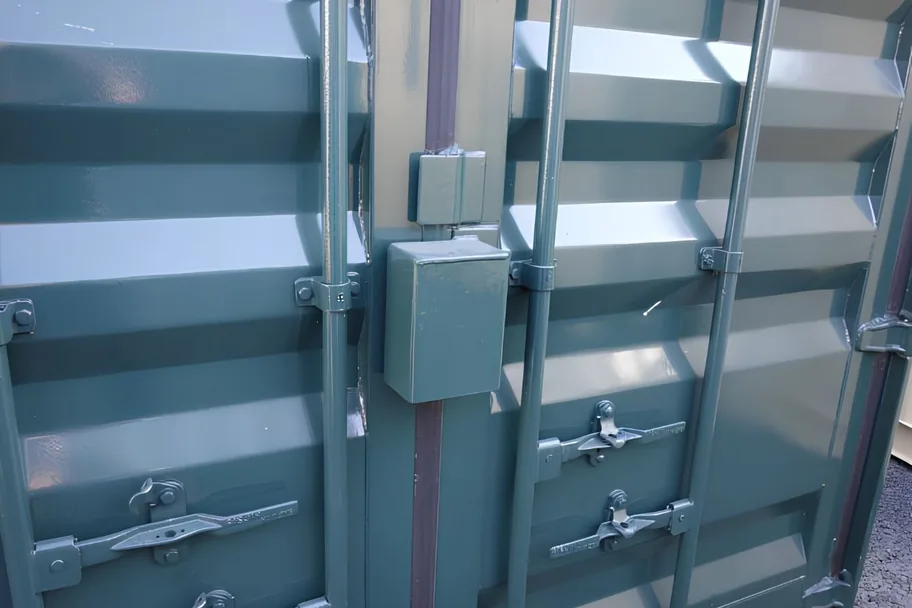
The best lock for shipping containers is a hidden shackle puck lock mounted inside a welded steel lock box. This combination shields the lock from bolt cutters, pry bars, and drills. Strong backup options include crossbar locks, heavy duty padlocks, and interior bolt locks.
Shipping containers are already the toughest storage buildings you can put on your property. The doors, however, are only as strong as the hardware securing them. This guide walks through every major lock option so you can protect your container like a pro.
A thief with a $20 pair of bolt cutters can defeat basic pad locks in under ten seconds. That is the uncomfortable math behind most job sites and backyard theft. The good news is that the right shipping container lock flips the equation completely in your favor.
Why Shipping Container Locks Matter
Cargo crime is not a small problem. The FBI investigates cargo theft as a form of organized crime because stolen freight and equipment feed larger criminal networks. Containers sitting on job sites and rural properties are frequent targets.
Most break-ins are crimes of opportunity. A bare padlock hanging in the open invites bolt cutters, and an unprotected handle invites a pry bar. Cargo container locks that resist cutting, prying, and drilling send thieves looking for an easier target.
Shipping Container Lock Options Compared
There is no single lock that fits every situation. The breakdown below covers the main storage container locks and where each one shines.
Shipping Container Lock Box with Puck Lock
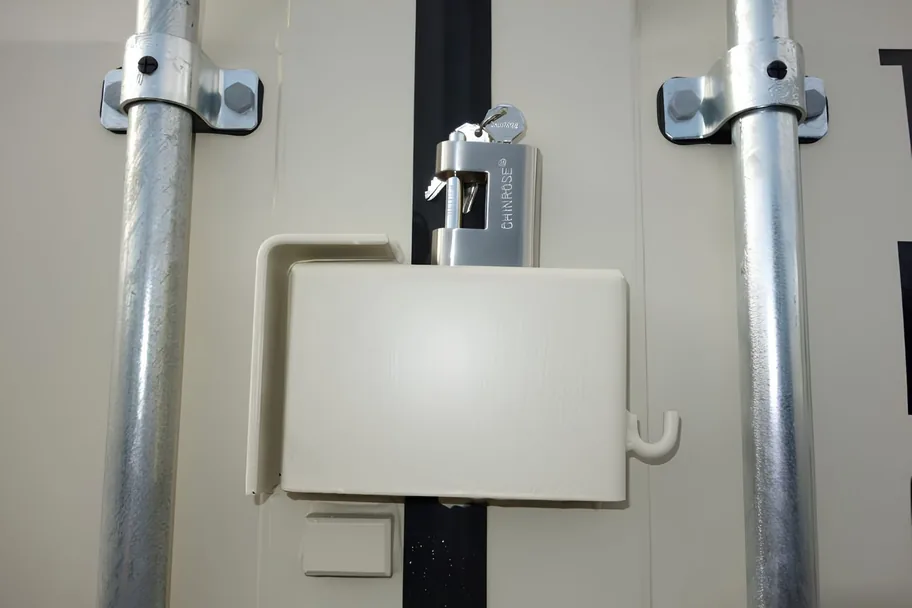
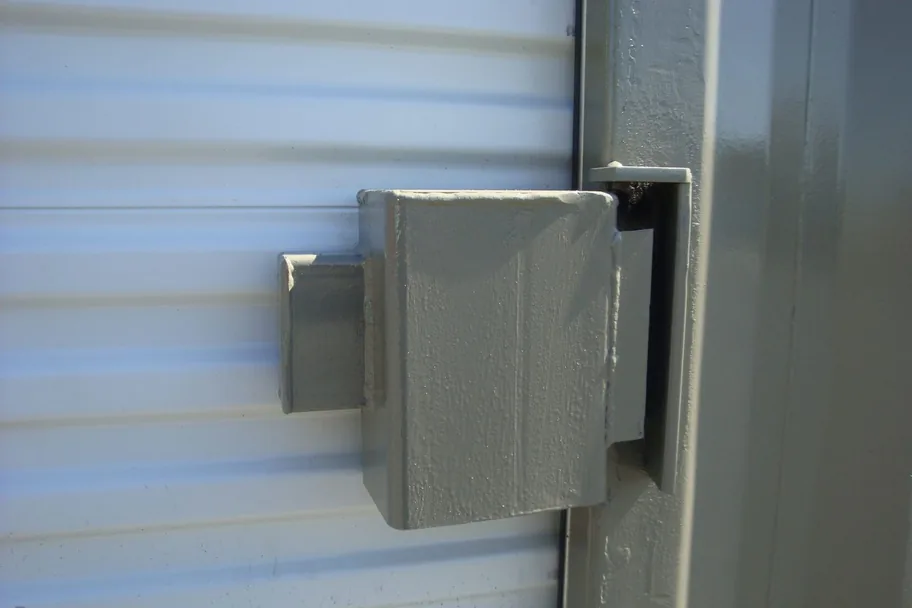
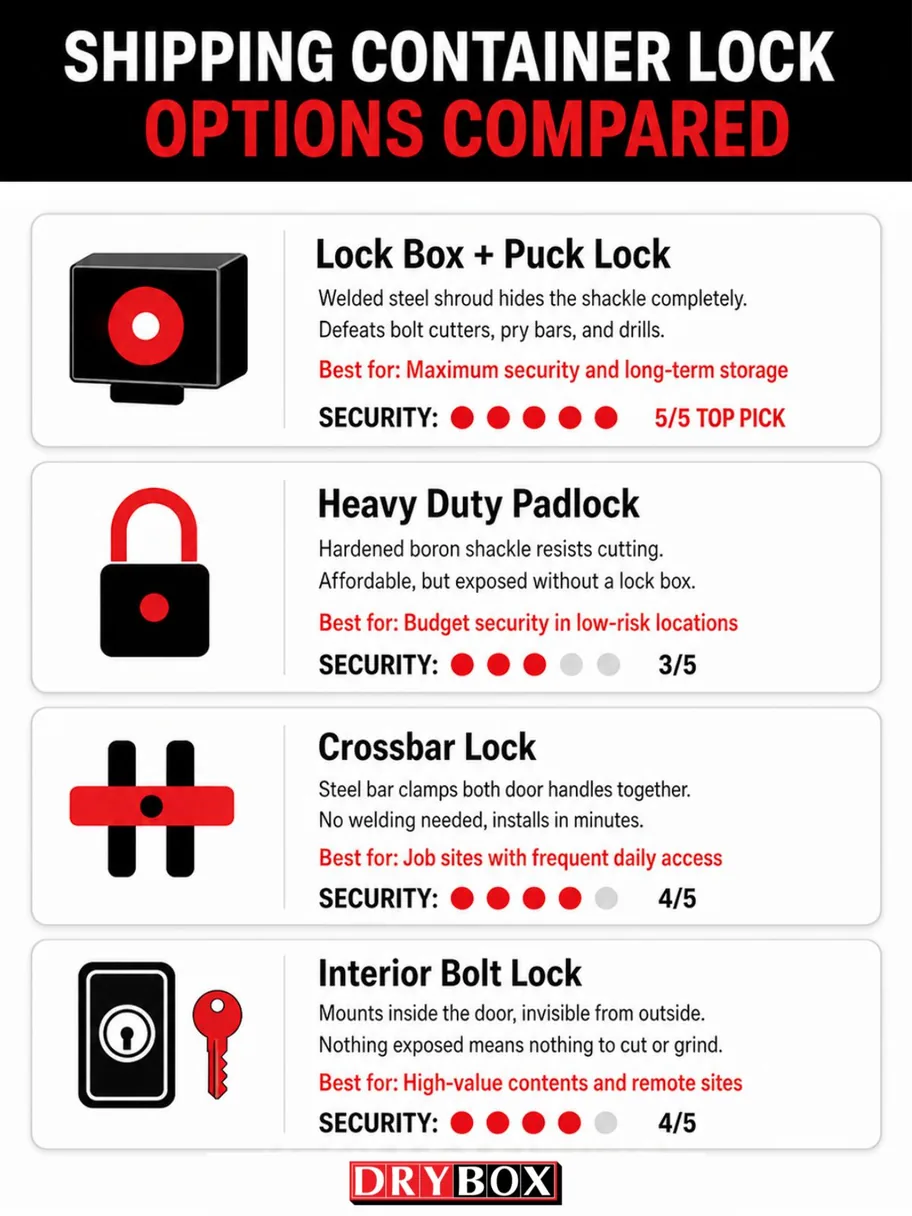
A shipping container lock box is a steel shroud welded over the door handles. A hidden shackle puck lock sits inside the box, leaving no exposed shackle for bolt cutters to grab. This pairing is widely considered the best lock for shipping containers.
Many containers come with a lock box already installed. Dry Box offers lock boxes on all common shipping container sizes like 20ft and 40ft shipping containers.
Heavy Duty Padlocks
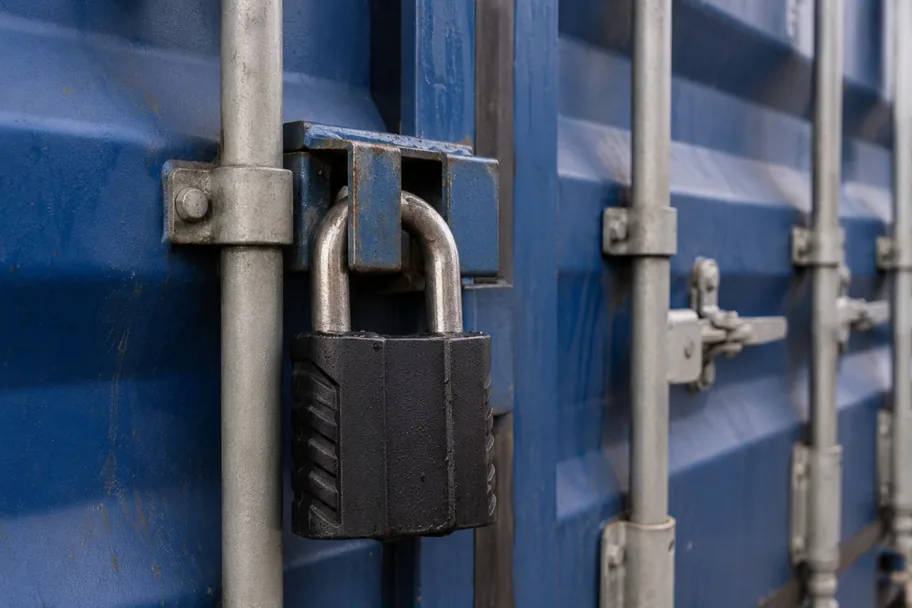
A quality padlock with a hardened boron shackle is the most common lock for shipping container doors. Look for a shackle at least 7/16 inch thick and a body rated for outdoor use. On its own, a padlock is decent security, and inside a lock box it becomes excellent security.
Crossbar Locks
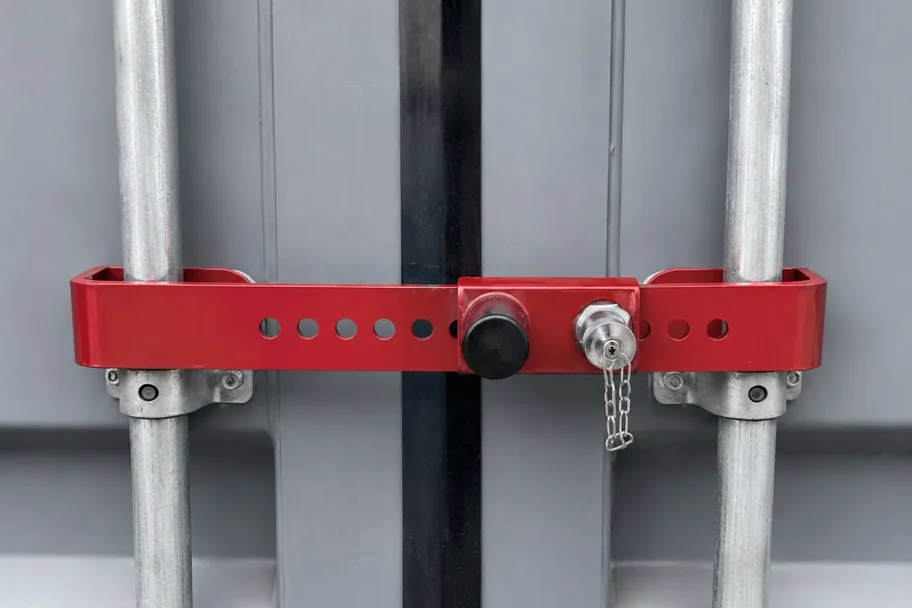
Crossbar shipping container door locks span both cargo doors and clamp the handles together. Since the bar prevents the handles from opening, the doors cannot swing open even if a hasp is compromised. They install without welding, which makes them popular on rented units and busy job sites.
Interior Bolt Locks
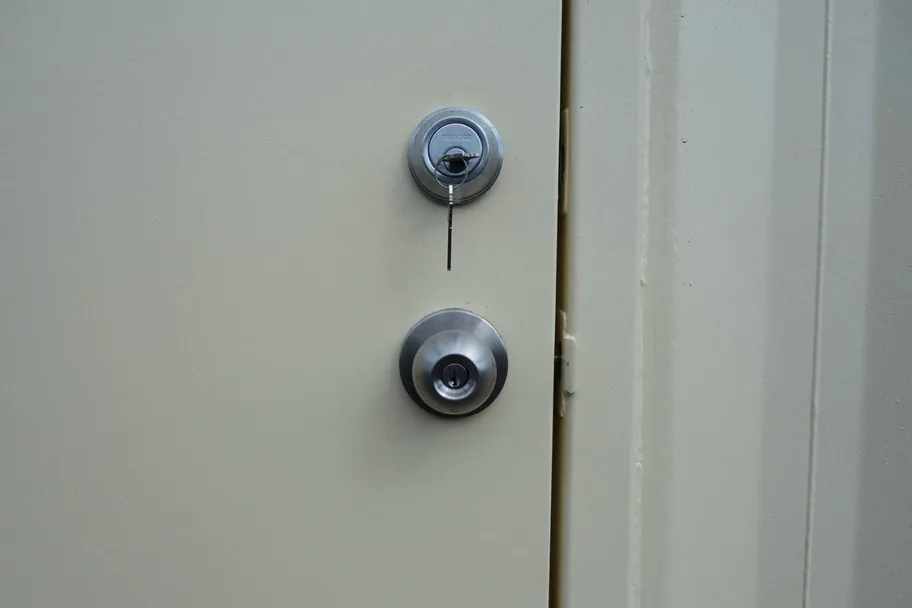
An interior bolt lock mounts on the inside of the door, completely out of sight and out of reach. Thieves cannot attack hardware they cannot touch. These work best when paired with a shipping container man door so you can still enter easily while the cargo doors stay sealed.
How to Choose the Best Lock for Shipping Containers
Match your security level to the value inside and the risk around you. Protection stacks up in layers, starting with a standard padlock, moving up to a hardened padlock with a crossbar, then a lock box with a puck lock, and finally a lock box combined with an interior bolt lock.
For a garden shed replacement holding lawn equipment, a hardened padlock may be plenty. For contractors storing power tools, a lock box with a puck lock is the smart baseline. Anything with high resale value deserves the full layered setup.
Also consider how often you open the doors. Daily access favors quick crossbar locks, while long-term storage favors welded lock boxes. Our shipping container door options page covers door styles that pair well with each lock type.
What Is a Shipping Container Twist Lock?
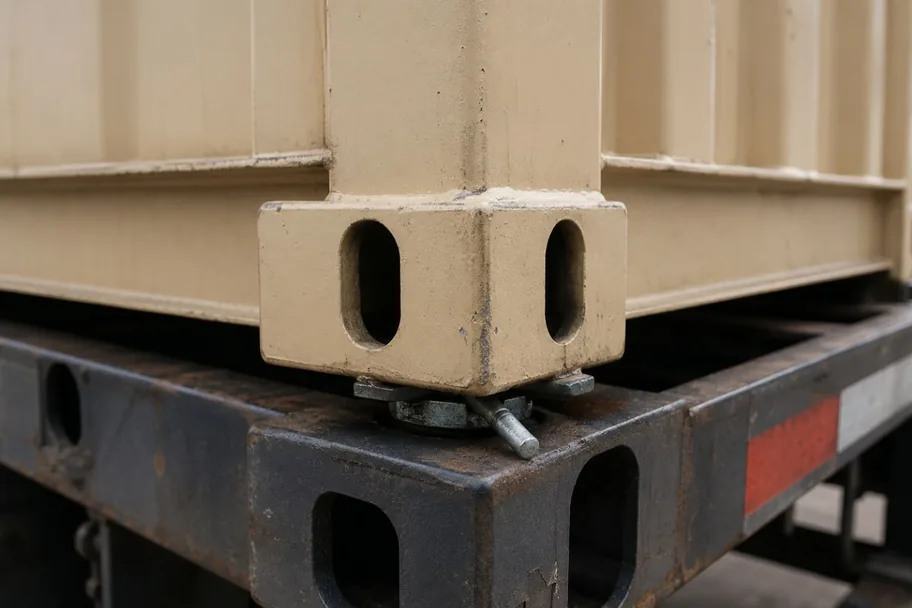
Here is where many buyers get confused. A shipping container twist lock is not a door lock at all. Twist locks are rotating steel fittings that drop into the corner castings of a container to secure it to a truck chassis, a ship deck, or another container.
Twist locks for shipping containers matter when you are stacking units or moving them frequently. They keep a locking storage container anchored so wind, weight shifts, and road vibration cannot move it. If your container never leaves your property, door security should be your focus instead.
Some property owners also use twist lock foundations to anchor a container to concrete footings. This prevents an entire container from being lifted or dragged, which does happen with smaller units. It is an easy upgrade that pairs well with strong cargo container locks on the doors.
Extra Security Tips for Any Locking Storage Container
Hardware is half the battle, and placement is the other half. Position your container so the doors face a well-lit, visible area rather than a hidden back corner. Thieves hate working where neighbors and cameras can see them.
Motion-activated lights and a simple camera multiply the effect of good storage container locks. Keep a log of serial numbers for everything stored inside as well. Dry Box can add security upgrades through our shipping container modifications shop, including lock boxes, security doors, and window shutters.
Renters get the same protection as buyers. Our storage containers for rent include heavy steel doors, and most sizes come equipped with a factory lock box.
Common Container Lock Mistakes to Avoid
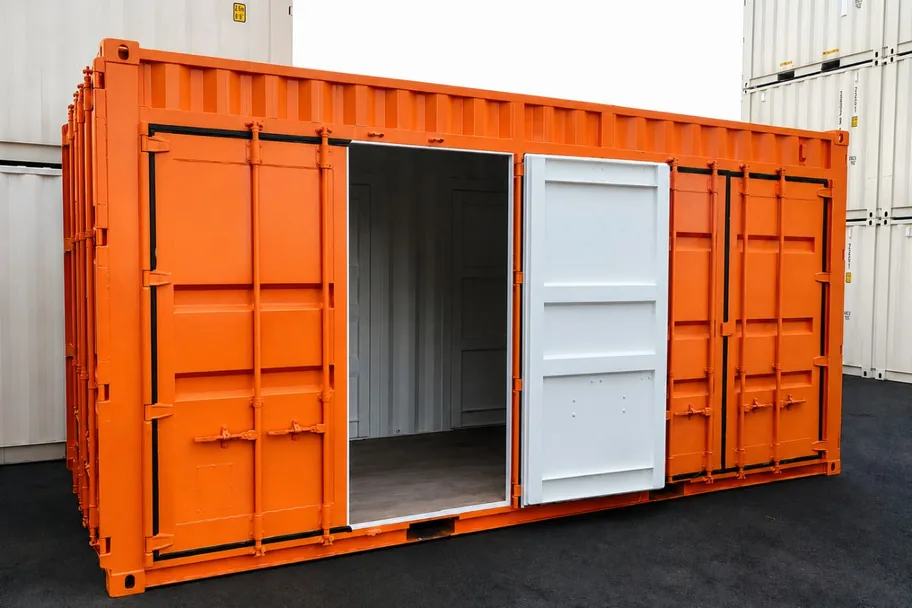
The most common mistake is buying an oversized padlock that will not fit inside a lock box. Measure the interior of your lock box before ordering, since most boxes are built around a standard 2 7/8 inch puck lock. A lock that hangs outside the box loses most of its protection.
Another frequent misstep is securing only one of the four vertical locking bars. Standard cargo doors have two handles per door, and each handle can accept a lock. Locking at least two handles on the primary door makes prying dramatically harder.
Finally, do not let a great lock hide a weak hasp. If the welded hasp or handle is thin or rusted, a thief will attack the steel around the lock instead of the lock itself. Inspect the hardware once a season and touch up any rust before it spreads.
Frequently Asked Questions
Can I weld a lock box onto a container I already own?
Yes. A bolt-on or weld-on lock box kit can be added to almost any container in about an hour. A professional weld gives the strongest result and keeps the box aligned with your door handles.
Do container locks rust in wet climates?
Exposed locks will corrode over time in rainy regions. Choose weather-rated locks with stainless or brass internals, and hit the keyway with silicone lubricant a few times a year.
Are keyed-alike locks a good idea for multiple containers?
Keyed-alike systems let one key open every container, which saves serious time on job sites. The tradeoff is that one lost key compromises the whole fleet, so protect that key carefully.
Will insurance cover theft from my shipping container?
Many homeowner and commercial policies cover contents in a container on your property, but some require proof of a locked unit. Ask your agent about lock requirements before you file a claim, not after.
Are smart locks or Bluetooth padlocks safe for containers?
Smart padlocks are convenient for tracking who opens your container and when. Choose one with a hardened shackle and a physical key backup, since dead batteries and weather can sideline electronics.
Get a Secure Container from Dry Box
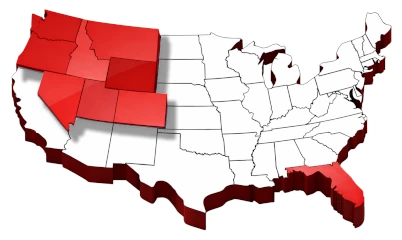
Dry Box carries the Northwest's largest selection of shipping containers for sale, including popular 20ft shipping containers with factory lock boxes. Prefer low monthly payments? Ask about our rent to own storage containers program.
Call us today or fill out our quote form here.